
Digital Printing Options for Full Colour Promotional Items Explained
Discover the best digital printing options for full colour promotional items in Australia — practical advice for businesses, resellers and agencies.

Written by
Rani Gupta
Branding & Customisation
Choosing the right decoration method can make or break a promotional merchandise campaign. When your client wants a vibrant, photographic logo across a run of branded tote bags, or your marketing agency needs sharp, full-colour artwork on conference notebooks, the printing technique you select directly affects the final result — and your margins. Digital printing options for full colour promotional items have expanded dramatically over the past decade, giving Australian businesses and resellers more flexibility than ever before. But with that flexibility comes complexity. Understanding which method suits which product, substrate, and budget is essential knowledge for anyone sourcing promotional products at scale.
What Is Digital Printing and Why Does It Matter for Promotional Products?
Digital printing refers to a broad family of printing techniques that apply artwork directly from a digital file to a product’s surface — without the need for screens, plates, or extensive manual setup. Unlike traditional methods such as screen printing, which requires a separate screen for each colour in a design, digital printing can reproduce unlimited colours, gradients, and photographic imagery in a single pass.
For promotional merchandise, this has been transformative. A Sydney-based events company ordering 200 branded lanyards with a multi-colour logo no longer needs to pay hefty setup fees or compromise on design complexity. A Melbourne marketing agency producing a small run of custom notebooks for a product launch can include full-bleed artwork with no additional cost per colour. This kind of flexibility is exactly why digital printing has become a cornerstone of the modern promotional products industry.
That said, digital printing is not a single method — it’s an umbrella term covering several distinct technologies, each with different applications, strengths, and limitations.
The Main Digital Printing Options for Full Colour Promotional Items
Direct-to-Garment (DTG) Printing
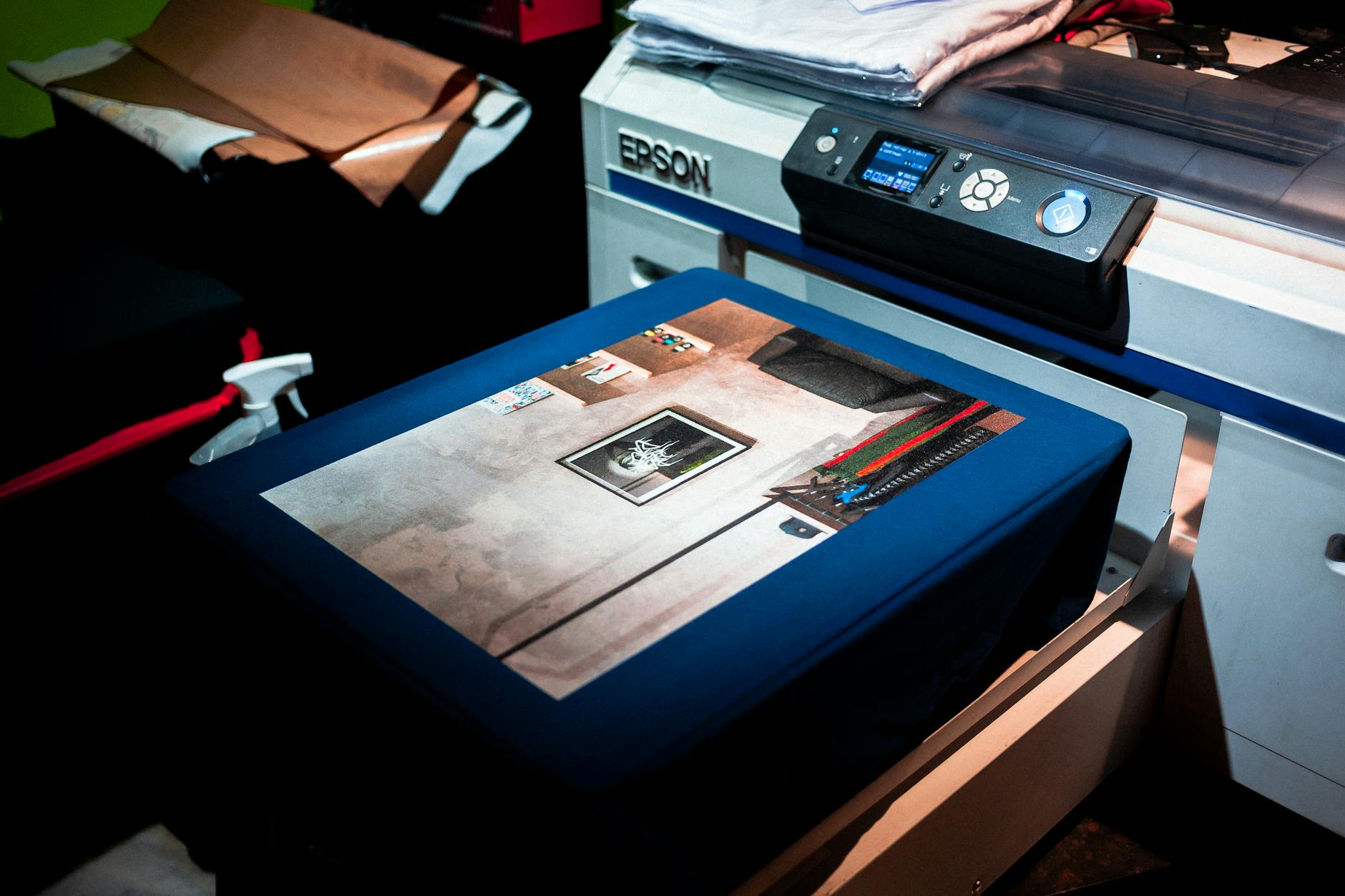
Direct-to-garment printing uses inkjet technology to print directly onto fabric, much like a standard printer works on paper. It excels at reproducing complex, photographic artwork on cotton-rich apparel with no minimum order quantity restrictions.
DTG is ideal for:
- Custom t-shirts with detailed or photographic artwork
- Small runs where screen printing setup costs aren’t justified
- Designs with many colours or gradients
The main limitation is substrate compatibility. DTG works best on 100% cotton or high-cotton blends. Polyester and performance fabrics don’t absorb the ink well, which can result in dull or faded prints. If you’re sourcing bulk custom t-shirts in Australia for a campaign that requires photographic imagery, DTG is often the go-to solution for shorter runs.
Wash durability is another consideration. While modern DTG inks have improved significantly, they may not last as long as screen-printed designs on high-wear garments. Pre-treating the fabric is essential for good results on darker garments.
UV Flatbed Printing
UV flatbed printing uses ultraviolet light to cure ink instantly as it’s applied to a flat surface. This method works on an enormous range of hard substrates — including acrylic, wood, metal, glass, leather, and rigid plastics — making it one of the most versatile digital printing options available.
For promotional products, UV flatbed printing is commonly used on:
- Branded coasters and drinkware accessories
- Awards and recognition pieces
- Rigid signage and display materials
- Tech accessories such as power banks and phone cases
If you’re sourcing custom coasters for real estate settlement gifts, UV flatbed printing delivers vibrant, durable full-colour results with excellent detail reproduction. The ink is cured instantly, making it scratch-resistant and highly durable — an important consideration for items that will be handled regularly.
UV printing also allows for textured effects, including raised or embossed finishes, which can add a premium tactile quality to branded items.
Dye Sublimation
Sublimation printing uses heat and pressure to transfer dye directly into the fibres of polyester-based materials or specially coated hard substrates. The result is a permanent, full-colour print that won’t crack, peel, or fade — because the ink becomes part of the material itself rather than sitting on top of it.
This makes sublimation particularly suited to:
- Polyester apparel and sportswear
- Custom lanyards and fabric badges
- Ceramic mugs and aluminium drinkware
- Mouse pads and neoprene products
For a Brisbane sporting club ordering full-colour custom fitness bands or performance apparel, sublimation is often the preferred method. The colours remain vivid even after repeated washing, which is critical for regularly worn items. For more on this, see our guide on custom fitness bands in Perth and custom gifts for sports days in Australia.
Sublimation does require white or light-coloured substrates to achieve accurate colour reproduction. On dark fabrics, the results are significantly compromised — something to flag with clients early in the briefing process.
Sublimation is also a natural fit for custom lanyards and ID cards, where full-colour printing across the entire lanyard width creates a highly professional, branded look at events and conferences.
Digital Transfer Printing (Heat Transfer)
Heat transfer printing involves printing artwork onto a special transfer film using digital inkjet or laser technology, then applying it to the product using heat and pressure. It bridges the gap between DTG and full sublimation, offering good colour reproduction across a wider range of substrates and fabric types.
Heat transfer is commonly used on:
- Mixed-fabric apparel
- Promotional bags and tote bags
- Items where other digital methods aren’t compatible
For lunch bags for adults or fabric cooler bags, heat transfer can deliver excellent full-colour branding across polyester, nylon, and blended materials where sublimation or DTG wouldn’t perform as well.
Modern digital heat transfers have improved significantly in durability, though they can still be susceptible to peeling if wash instructions aren’t followed — worth communicating to end clients.
Digital Direct-to-Object (DTO) and Pad Printing Hybrids
Some promotional product categories — particularly smaller items like pens, USB drives, and keyrings — use digital pad printing or direct-to-object techniques to achieve full-colour results on curved or irregular surfaces.
For cheap promotional USB drives with full-colour branding, digital pad printing or UV direct printing can reproduce a brand’s complete logo palette on small, complex surfaces that other methods can’t easily accommodate.
Choosing the Right Digital Printing Method for Your Campaign
With several digital printing options available, the right choice depends on a handful of key variables.
Substrate and Product Type
Always start with the product. Hard, flat substrates suit UV flatbed printing. Polyester fabrics and coated hard items are ideal for sublimation. Cotton-rich garments work best with DTG. Irregular or mixed-material products may require heat transfer or digital pad printing.
Order Volume and Budget
Digital printing generally has lower setup costs than screen printing, making it cost-effective for smaller runs. However, per-unit costs can be higher on very large orders where screen printing’s economies of scale become more significant. For campaigns above 500 units with simple artwork, revisit whether a hybrid approach makes sense.
Colour Complexity and Artwork Requirements
If a design includes photographic imagery, subtle gradients, or more than four colours, digital printing is almost always the smarter choice. For simple one or two-colour logos, other methods like screen printing, embroidery, or laser engraving may actually produce a sharper, more durable result at lower cost. Our guides on biodegradable seed paper bookmarks for library promotions and aromatherapy oil diffuser products explore how decoration method selection impacts presentation for niche promotional items.
Turnaround Times
Digital printing typically offers faster turnaround than screen printing or embroidery, since there’s no screen preparation or thread setup involved. Many Australian suppliers can fulfil digitally printed orders within 5–10 business days once artwork is approved — though rush timelines vary by supplier and product type.
What Resellers and Agencies Need to Know About Digital Print Specs
When briefing suppliers on a digital print job, a few practical details will save time and prevent costly reproof cycles.
Artwork resolution: Digital printing generally requires a minimum of 300 DPI at the print size. Low-resolution logos or raster images will appear pixelated when enlarged. Always request vector files or high-res raster artwork from clients before submitting jobs.
Colour accuracy: Digital printing uses CMYK colour mixing, which can shift RGB or PMS-specified colours. Request a digital proof — and where colour accuracy is critical, request a physical sample before committing to a full run.
Bleed and safe zones: Full-bleed digital prints require artwork to extend beyond the print boundary. Confirm your supplier’s bleed requirements during the briefing stage to avoid artwork being cropped incorrectly.
Print dimensions: Always confirm the exact print area available on each product. A standard A5 notebook and a hardcover journal may have very different usable print zones, even if they look similar in a product catalogue.
Conclusion: Key Takeaways for Sourcing Full Colour Promotional Products
Digital printing options for full colour promotional items give Australian businesses, resellers, and marketing agencies extraordinary creative freedom — but selecting the right method requires a clear understanding of the product, substrate, artwork, volume, and budget involved. Getting this right from the start produces better results, fewer reproof cycles, and happier clients.
Here are the key points to take away:
- Match the method to the substrate: DTG for cotton apparel, sublimation for polyester and coated items, UV flatbed for hard surfaces, and heat transfer for mixed-material products.
- Digital printing excels at complex artwork: It’s the best choice for photographic imagery, gradients, and multi-colour designs where other methods would require expensive setup fees or compromise on colour.
- Budget and volume affect the decision: Digital printing is typically more cost-effective for smaller runs; high-volume orders with simple artwork may benefit from a hybrid approach.
- Artwork quality determines output quality: Always secure high-resolution, print-ready files from clients before jobs are submitted to avoid delays and reproof costs.
- Always request a proof: For brand-critical colour accuracy, request a physical sample before approving full production — especially on new product types or with new suppliers.